Homemade and bought baked goods have become a sweet staple during the holiday season. But where does the sugar come from?
In 1890, the first sugar beet factory was in Grand Island. Years later, in 1910, a sugar factory was built at Scottsbluff and is one of four factories run by the Western Sugar Cooperative across four states—including Nebraska, Colorado, Wyoming, and Montana.
In the early 20th Century, sugar beet production was moved into western Nebraska and panhandle areas as it was more favorable for the crop.
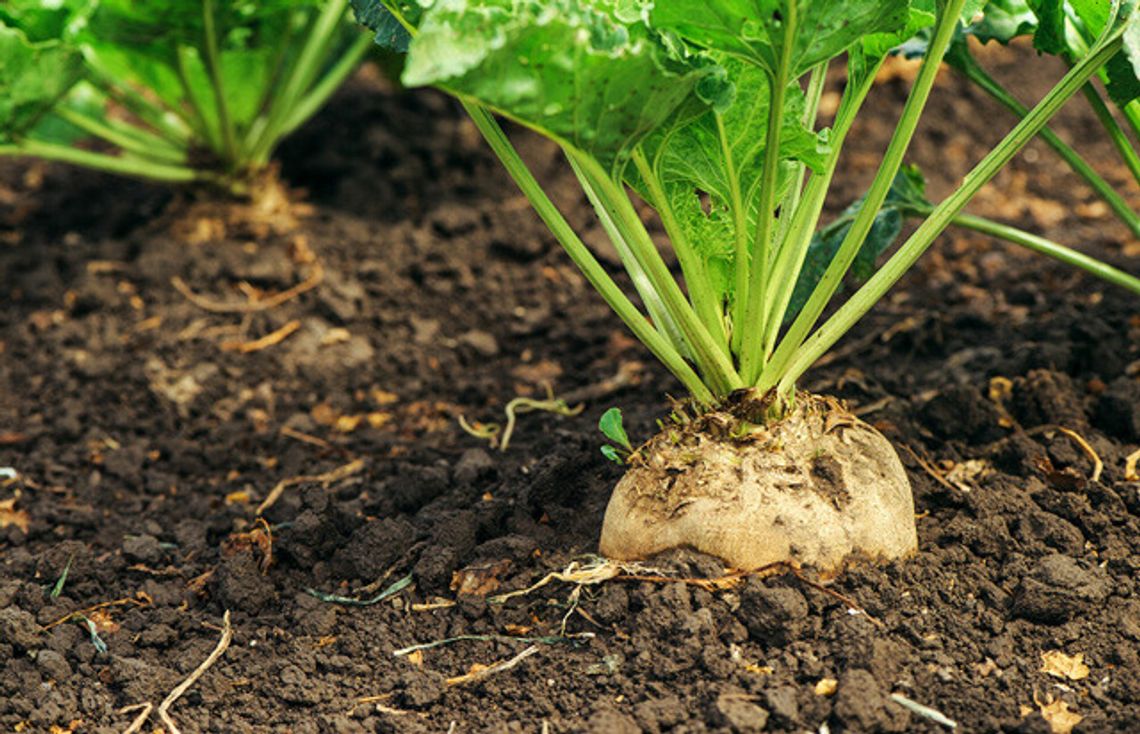
Sugar beets are a root crop and thrive in temperate climates. The beets are planted late March and early April, with the average growing season being about five months.
Sugar beet farms can be found in California, Colorado, Idaho, Michigan, Minnesota, Montana, Nebraska, North Dakota, Oregon, Washington, and Wyoming. A fully grown sugar beet is about a foot long, weighs two-to-five pounds, and about 18 percent sucrose. Since beets are a perishable vegetable, they are processed at 20 factories which are found near the fields.
Sugar beets are harvested by removing the tops of the plant with a defoliator.
Early harvesting starts in September with scheduled growers to deliver their crop. The factory keeps only about three days of crop processing on hand, allowing a continuous flow of fresh beets. The beets are pulled out of the ground by a sugar beet harvester, are loaded into trucks, and delivered to a receiving station. The sugar beets are stored in long piles, 20ft high.
The beginning of October marks the point when sugar beet harvest starts for longterm storage, and all growers deliver to the receiving stations. These stations will house the beets and haul into the factory for processing over the next five to six months.
A majority of the crop will be harvested in about three weeks; however, just like other crops, weather can slow harvesting time and affect the storability.
Growers are constantly checking the sugar beets during harvest to deliver a storable crop. When harvest has begun the factory will run 24 hours a day, seven days a week, October through April until the entire crop has been processed.
Sugar is extracted from the sugar beets and turned into granulated sugar, brown sugar, and powdered sugar. This sugar is packaged and shipped throughout the country.
Every part of the sugar beet can be used for co-products, such as:
• Sugar production—The root’s high sucrose content is extracted to make granulated sugar for food, baking, and beverages, often indistinguishable from cane sugar.
• Animal feed—The fibrous beet pulp left after sugar extraction is a valuable, nutrient- rich feed for livestock like cattle, pigs, and horses.
• Biofuels & energy—The sugar beet juice ferments into bioethanol, a renewable fuel additive, especially in Europe, and byproducts like molasses and vinasses can fuel boilers for biogas.
• Sugar alcohols—The processing yields sorbitol which is used in sugar-free products (gums, mints) for sweetness without blood sugar spikes.
• Molasses byproducts— Dark beet molasses is used in animal feed, for fermentation, and even as a cost-effective, less corrosive de-icer for roads.
• Pharmaceuticals—Chemicals extracted from sugar beets are used in medicine.
• Food industry—Beet sugar is a common sweetener used in processed foods; beet greens can be eaten as a vegetable.