Go to main contentsGo to main menu
Wednesday, March 25, 2026 at 8:39 AM

Clay Co. crews respond to Cottonwood fire after initial deployment to Morrill fire in Western NE

Clay Co. crews respond to Cottonwood fire after initial deployment to Morrill fire in Western NE
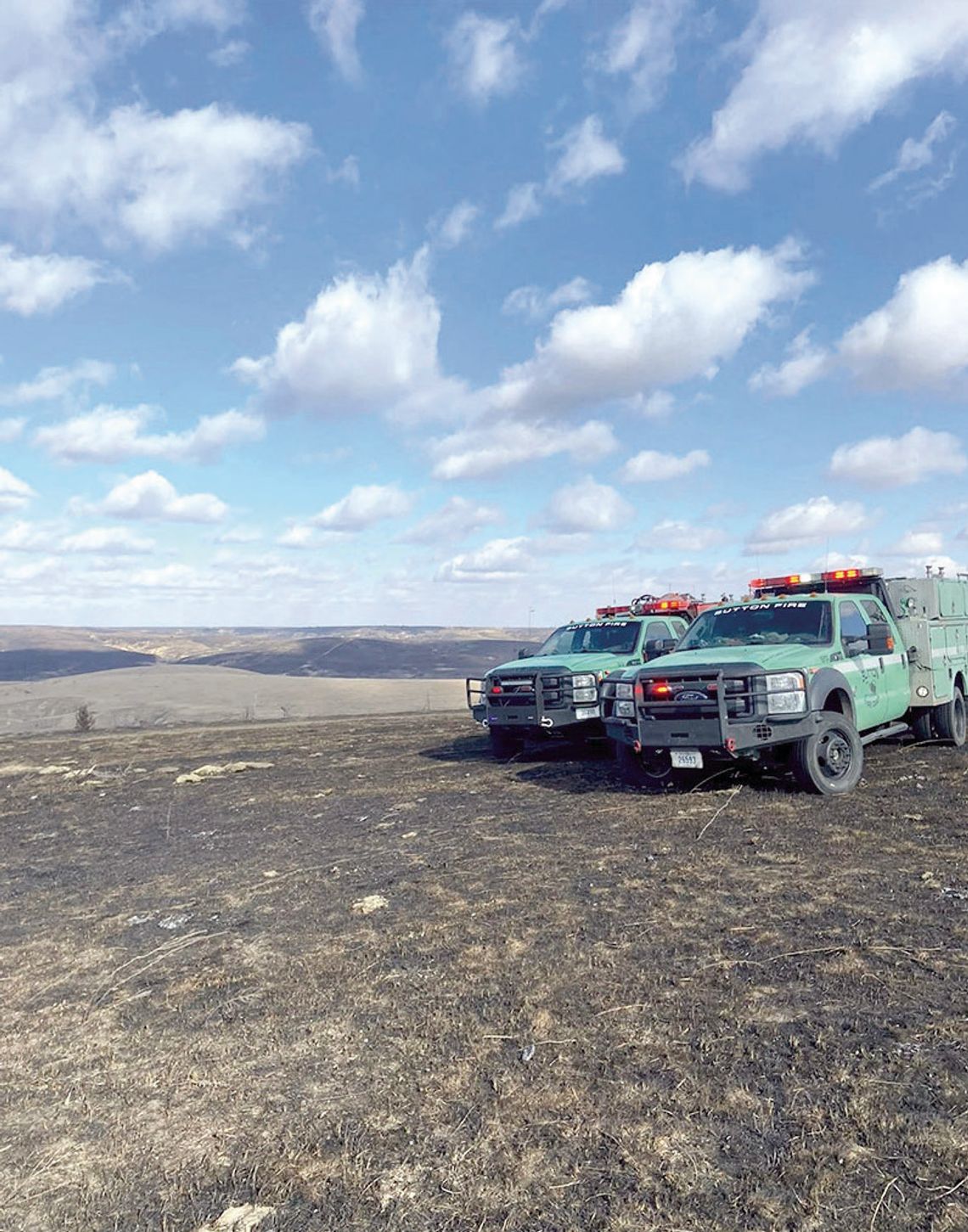
Sutton’s wildland fire task force was one of several Clay County fire departments that responded and aided in battling two of the major wildfires that broke out in the past few weeks in western Nebraska. COURTESY PHOTO FROM THE SUTTON VOLUNTEER FIRE DEPARTMENT | CLAY COUNTY NEWS

Multiple fire departments from Clay County, along with assistance from neighboring Henderson, were deployed last week to assist with major wildfires in Nebraska, including crews from Sutton and Harvard, as well as a firefighter from Henderson.

Sutton Fire Chief Tracey Landenberger said the call came in Thursday night as wildfire activity increased across the state.

Crews were initially activated Thursday night for the Cottonwood Fire, with Landenberger receiving the call at approximately 10:30 p.m. to report to the Brady Fire Station.

Early Friday morning, around 3:45 a.m., the team was redirected to the Morrill Fire, where resources were needed more urgently. After spending two days assisting on the Morrill Fire, crews were then reassigned back to the Cottonwood Fire near Brady as conditions continued to evolve.

SHIFTING ASSIGNMENTS

The shifting assignments reflect how quickly priorities can change during large wildfire events, often with little notice and at all hours of the day.

Both fires were part of a series of large wildfires that have impacted Nebraska in recent weeks, fueled by dry conditions, strong winds, and unseasonably warm temperatures.

Approximately eight to ten firefighters responded from the participating departments.

Sutton deployed two trucks as part of its Sutton Task Force, a specialized group within the Sutton Volunteer Fire Department trained for wildland firefighting. The Harvard Volunteer Fire Department sent two additional trucks, and one firefighter from Henderson joined the group, traveling with the Sutton and Harvard crews.

“It’s a combined effort,” Landenberger said. “Departments work together and respond as a team when these larger fires happen.”

Once on scene, crews were assigned to structure protection and fire suppression efforts, working to defend properties in the fire’s path. Landenberger said one of their primary assignments included helping protect a ranch threatened by the advancing fire.

“They were working to save structures, pushing fire away from buildings, and trying to hold lines,” he said. “That’s a big part of what we do on those fires— protecting what we can while also working to contain it.”

SUTTON’S TASK FORCE While the response included multiple agencies, Sutton’s participation came through its own Task Force, which operates as a dedicated wildland unit within the department. Not all firefighters in Sutton are part of this group, as it requires additional certification and training.

“Wildland is a different type of firefighting,” Landenberger said. “It takes extra training, and it takes people who are willing to be gone for extended periods of time.”

Those who serve on the Sutton Task Force often respond to incidents across the state, working long hours in challenging conditions that can include shifting winds, dry fuels, and rapidly changing fire behavior.

One distinguishing aspect of the program is how it is funded.

“All of that is self-funded,” Landenberger said. “The equipment, the fuel, the lodging, the meals—we generate those funds through controlled burns and work we do for agencies and landowners.”

That work includes controlled burns for organizations based out of Broken Bow, as well as projects for local landowners. The revenue generated allows the team to pay for its own training, equipment, and deployments without relying on local tax dollars.

At the same time, those resources directly benefit the Sutton community.

“When those trucks are here, they’re here for Sutton,” Landenberger said. “It strengthens what we’re able to do at home.”

As wildfire activity continues to increase across Nebraska and the surrounding region, the need for trained wildland firefighters is expected to grow.

“It’s something we’re going to need more of,” Landenberger said. “Not just here, but across the state.”

The recent deployment highlights how local volunteer firefighters contribute to a larger statewide response system while also strengthening emergency services in their own communities.

Sutton’s wildland fire task force prepares to head west to help battle some of Nebraska’s largest wildfires in the history of the state over the past few weeks. COURTESY PHOTO FROM THE SUTTON VOLUNTEER FIRE DEPARTMENT | CLAY COUNTY NEWS


Share
Rate

e-Edition
The Clay County News