More than books:
People still picture libraries as quiet places filled with shelves of books and the occasional whispered conversation.
But across Clay County, that picture doesn’t come close.
In towns like Sutton, Fairfield, Clay Center, and Harvard, libraries have quietly evolved into something much bigger—spaces where kids play, families gather, technology is accessed, and communities stay connected. They’ve become places where people show up not just for what they need, but for what they didn’t even realize was available.
A few years ago, walking into the Sutton Public Library might have meant a quiet visit with only a handful of people inside.
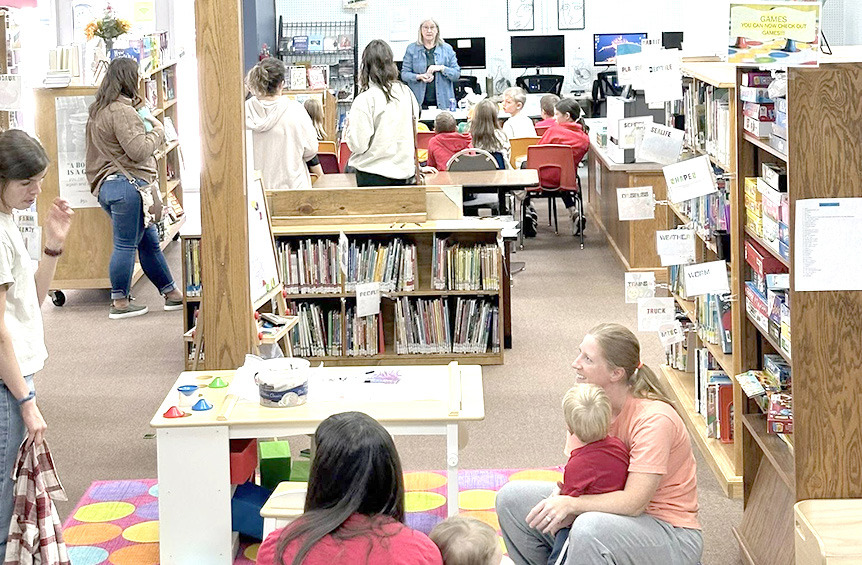
Today, that same space is filled with activity.
“When I first started, we were seeing on average five or fewer people a day,” said Crystal Godina. “Now we have days where we may have upwards of 20 to 30 people in the library.”
Not all of them are coming for books—and that’s exactly the point.
The library has expanded to include STEM play areas for younger children, interactive gaming like the Nex Playground that encourages movement, and access to digital reading through the Libby, allowing patrons to check out books and audiobooks from their phones or tablets.
“They are not all coming to check out books or to read,” Godina said. “But they are coming in the doors—and that’s what counts.”
Some of the most surprising offerings are the ones many people don’t even realize exist.
The Sutton library includes a Glowforge laser cutter, a color copier and laminator, and a fully equipped podcast production space—tools that open the door to creativity and learning in entirely new ways.
While the podcast room is available for public use, it has It’s one of those things people are often surprised to learn is available—once they walk through the doors.
For anyone interested in storytelling, interviews, or even starting a small podcast, the opportunity is already there.
At the same time, the library has become a gathering place— especially for families.
Monthly toddler preschool hours bring young children together for stories and crafts, while also creating a space for parents to connect.
“It benefits the children… but also the stay-at-home and homeschooling mothers,” Godina said. “They stay and socialize with one another.”
Step inside the Fairfield Public Library, and you’ll find a space where history and community meet.
Housed in an original Carnegie library building, the atmosphere is warm, familiar, and quietly active.
“Libraries are an important part of our small communities,” Sonny Otto said. “It offers space where everyone is welcome and can utilize its resources for free.”
But what’s happening inside goes far beyond checking out books.
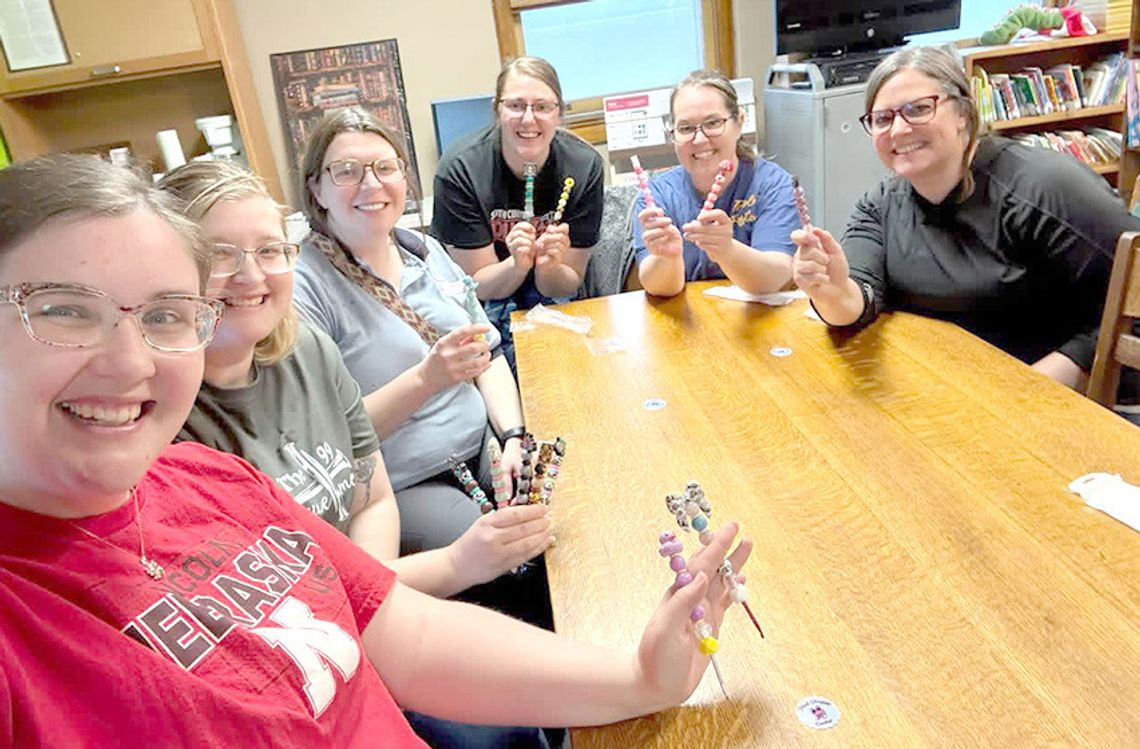
On any given week, crochet groups gather to work and visit. Book clubs and even a cookbook club bring people together over shared interests. A monthly StoryTime welcomes younger children, while summer reading programs draw dozens of participants.
“Many people visit our library and learn about the things that are happening, then reply, ‘I didn’t know you have that!’” Otto said.
That sense of discovery is part of what keeps the library growing.
Plans are already in motion for expanded programming, including an ancestry initiative and a future makerspace area.
At the same time, the Fairfield library continues to meet everyday needs in practical ways—from large print materials and visual aids for those with impaired vision to items like projectors, display easels, and even coffee equipment available for checkout.
For many residents, the Clay Center Public Library is as much about access as it is about enrichment.
It’s a place to check out books, puzzles, DVDs, and games, but also a place to print a document, send a fax, or use a computer when those resources aren’t available at home.
According to the library, providing access to technology remains a central part of its mission.
Like other libraries in the county, Clay Center has seen an increase in homeschool groups using the space, along with growing use of digital platforms like Libby and Hoopla.
Throughout the year, programs like summer reading, holiday events, and community activities continue to bring people together, reinforcing the library’s role as a dependable and welcoming place for all.
More than a century after its doors first opened, the Harvard Public Library continues to serve its community in many of the same ways, while quietly adapting to modern needs.
Built in 1914 with funds from the Carnegie Foundation and opened in 1915, the library has remained in continuous use ever since.
Today, it offers books for readers of all ages, along with audiobooks and movies. Patrons can access computers, Wi-Fi, printing, and scanning services, and an enhanced reading device is available for those with visual impairments.
The library also provides meeting space for local groups and hosts a summer reading program for elementary-aged children, continuing its long-standing role in supporting literacy and learning.
Across all four communities, one theme stands out.
Libraries are no longer defined solely by the books on their shelves.
They are places where children come to play and learn, families gather and connect, students and homeschoolers find resources, residents access technology, and communities come together.
They are also one of the few remaining spaces where someone can walk in, stay as long as they like, use valuable resources, and not be expected to spend a dollar.
But that kind of space doesn’t sustain itself without support.
While many operational costs are covered through city funding, programs, expansions, and new opportunities often rely on grants, donations, and just as importantly, community use. Every person who walks through the door, attends a program, checks out a book, or tells someone else about what the library offers plays a role in keeping it relevant and supported.
Small town libraries don’t just exist because they always have. They continue because communities choose to use them, support them, and see their value.
In a time when so many services come with a cost, Clay County libraries continue to offer something rare: access, opportunity, and connection for anyone who walks through the door.
For those who haven’t stopped in lately, there’s a good chance they’ll discover something they didn’t know was there, and a reason to help make sure it’s still there for years to come.