Sitting quietly on a side street in Harvard is a small brick building that many people could easily drive past without a second glance.
It has thick brick walls, barred windows, and just enough room for two jail cells. At first glance, it looks exactly like what it is: an old town jail.
But this little building once belonged to a 16-yearold boy and later became the property of one of the most famous ventriloquist dummies in America.
Welcome to one of the strangest stories in Clay County history.
Located on West Oak Street, the Harvard Jail has been part of the community for well over a century. Built during Harvard’s early years, the structure served as the town jail for decades. It was designed for function rather than comfort, with sturdy brick construction, iron bars, and small cells intended to hold prisoners awaiting court appearances or serving short sentences.
When Harvard was founded in the 1870s, life on the Nebraska prairie looked very different than it does today. Dirt streets, horse-drawn transportation, and a rapidly growing population created the need for basic public services. Like many communities of the era, Harvard eventually built a jail to help maintain order in a growing town.
For many years, the building quietly did its job.
Then came one of the most unusual chapters in Nebraska history.
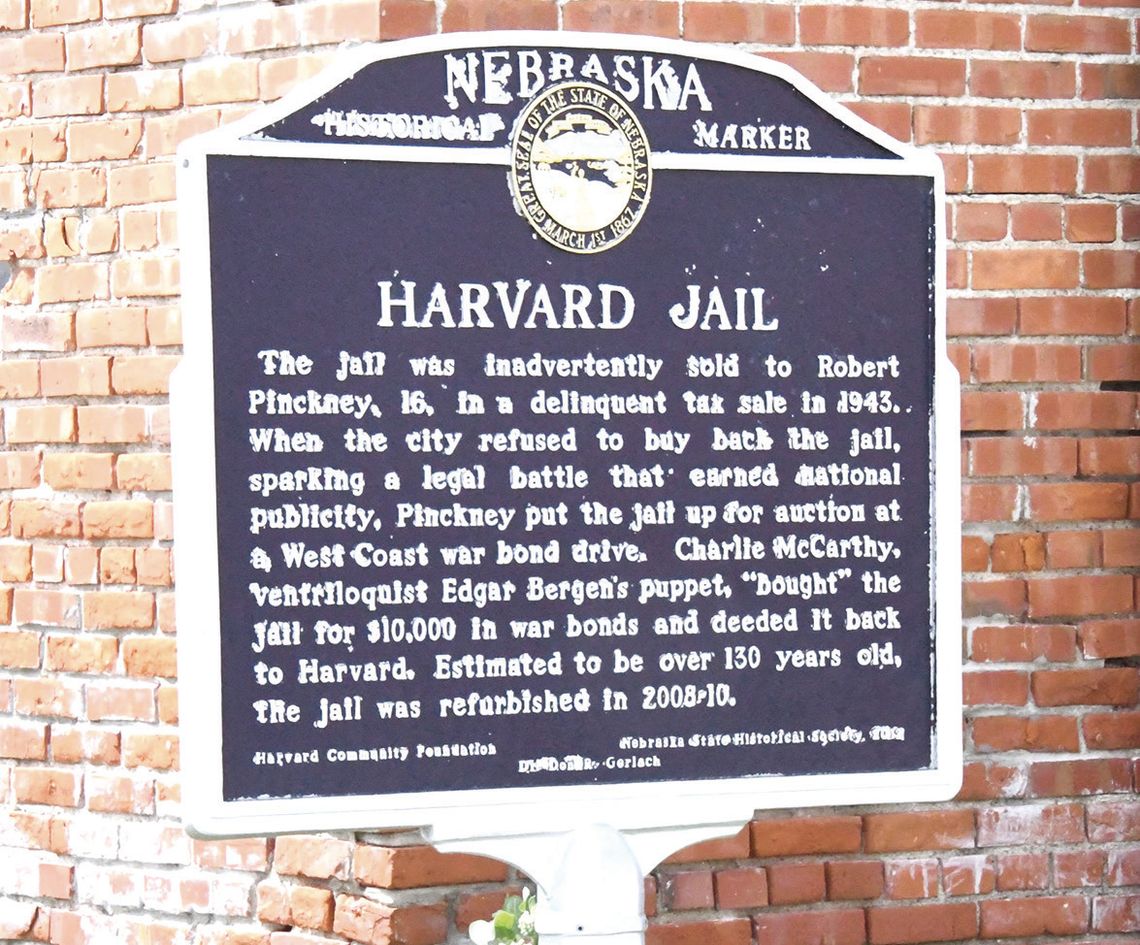
During World War II, Americans were buying war bonds, conserving resources, and doing what they could to support the war effort. In Harvard, 16-year-old Robert Pinckney was reviewing a list of properties available through a delinquent tax sale when he noticed something unusual.
Among the properties listed was the Harvard Jail.
Somehow, through what appears to have been a clerical error, the city-owned building had ended up on the tax sale list.
According to accounts of the story, Pinckney pointed out the mistake to city officials. When no immediate action was taken to correct it, he decided to purchase the property himself.
For approximately $1.50, he became the legal owner of the Harvard Jail.
Just like that, a teenager owned the town jail.
Before long, newspapers from Nebraska and across the country were telling the story of the boy who bought a jail. At a time when most headlines were filled with news from overseas battlefields, the unusual tale offered readers a rare bit of humor.
As publicity grew, the story eventually reached California, where a wounded sailor recovering from war injuries suggested using the jail as part of a war bond fundraising campaign. The proposal was simple: auction the jail and use the proceeds to support the war effort.
Pinckney agreed. The resulting publicity attracted national attention and introduced countless Americans to a small Nebraska community they had never heard of before.
Then came the winning bid. The purchaser was Charlie McCarthy, the famous wooden ventriloquist dummy performed by entertainer Edgar Bergen. During the golden age of radio, Bergen and McCarthy were among the most recognizable entertainers in the country, drawing millions of listeners each week.
Through the war bond campaign, Charlie McCarthy “purchased” the jail for $10,000 in war bonds. The funds supported the war effort, and ownership of the building was eventually returned to the City of Harvard.
The sequence sounds almost impossible: a tax sale mistake, a teenage owner, national publicity, a war bond auction, and finally a ventriloquist dummy. Yet every step of the story is documented, making the Harvard Jail one of Nebraska’s most unusual historical landmarks.
As entertaining as the ownership story may be, the building itself remains an important piece of Harvard’s history.
Visitors can still see the small brick structure. Though modest by modern standards, the jail offers a tangible connection to the community’s earliest years. While many historic buildings have been lost through redevelopment or neglect, the jail survived, standing as a reminder of a different era in Nebraska’s history.
By the early 2000s, preservation efforts were needed to ensure the structure remained standing. Local supporters recognized that both the building and its remarkable story deserved protection. Restoration work took place between 2008 and 2010, helping preserve the jail for future generations.
In September 2010, a Nebraska Historical Marker was dedicated at the site, ensuring visitors could learn the story behind the little brick building.
Today, travelers who stop at the marker often arrive expecting a simple story about an old jail. Instead, they discover a tale involving a teenager, a wartime fundraiser, national headlines, and one of the most famous fictional characters in America.
The Harvard Jail reminds us that history isn’t always found in grand buildings or famous battlefields. Sometimes it survives in unexpected places: a small brick jail on a quiet street, a teenager willing to ask questions, and a story so unusual that it still makes people smile decades later.
That is part of what makes Clay County’s historical markers worth exploring. Behind each one is a story waiting to be discovered, and sometimes those stories are stranger than fiction.
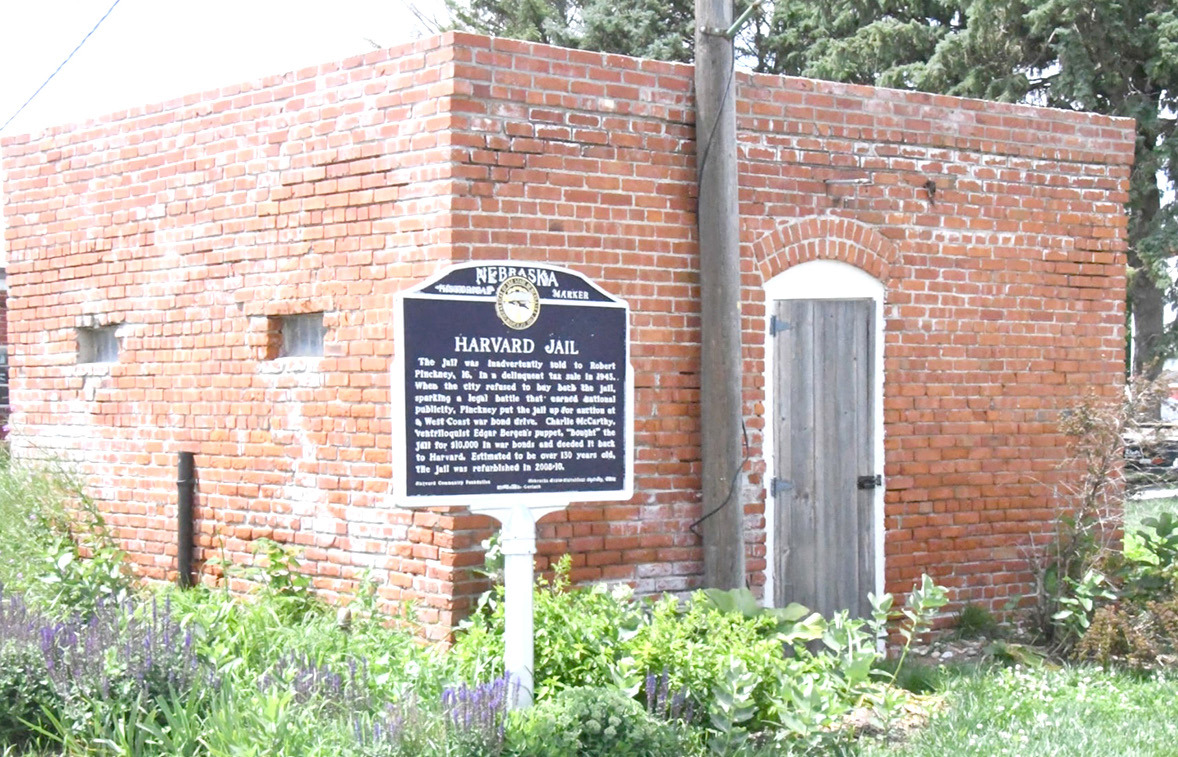
The historic Harvard Jail still stands on West Oak Street in Harvard. Estimated to be more than 130 years old, the small brick structure was restored between 2008 and 2010 and remains one of Clay County’s most unusual historic landmarks. DIANE SMITH | CLAY COUNTY NEWS