Go to main contentsGo to main menu
Wednesday, June 17, 2026 at 1:04 PM

Sutton schools’ facility study focuses on the future of education

Sutton schools’ facility study focuses on the future of education
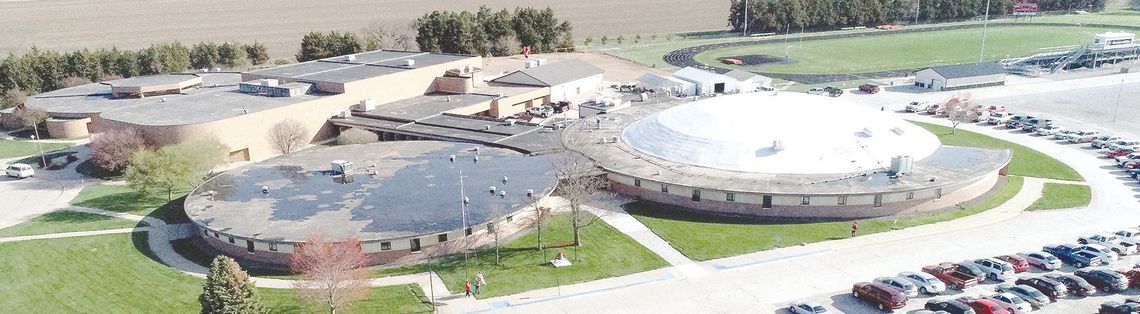
Sutton Public Schools is in the midst of a facility study, according to Superintendent Jason Cline. The SPS Board of Education approved the study last fall and hired the architectural firm BVH to conduct the study. CCN FILE PHOTO | CLAY COUNTY NEWS

What should education look like in Sutton 10 years from now? What about 20 years? Or even 50?

According to Sutton Public Schools Superintendent Jason Cline, that question is at the heart of the district’s ongoing facility study.

While some residents may view the study as a discussion about buildings or potential construction projects, district leaders say the process is really about understanding what opportunities the community wants future students to have and whether current facilities can support that vision.

The Sutton Public Schools Board of Education approved a facility study last fall and hired BVH Architecture to evaluate district facilities. Since then, engineers, architects and facility specialists have spent months examining the buildings and gathering information about their condition and future needs.

Following this interview, Cline provided a tour of the school, offering a firsthand look at many of the challenges being discussed.

The district’s high school building dates back to the early 1960s, while the elementary building was constructed in the late 1970s. Although the facilities have been well maintained, much of the original design remains intact. During the tour, Cline pointed out areas where space is limited, hallways become congested, and modern expectations for accessibility, security and technology are difficult to accommodate in buildings designed decades ago.

The superintendent stressed that the buildings themselves are not the problem.

“Our building has done its job. It’s a great building,” Cline said.

Instead, the question is whether facilities designed for students in the 1960s and 1970s can continue to support the educational expectations of today and tomorrow.

When Sutton’s high school was built, students spent most of their day sitting in rows of desks facing the front of the classroom. Today, education often includes technology, small-group collaboration, career training, college-credit courses and hands-on learning experiences that require different types of spaces.

“As education changes, have we changed with those times?” Cline asked.

One factor driving the conversation is growth. The district currently has an incoming kindergarten class of about 40 students, larger than many recent classes. Sutton has also experienced residential growth in recent years, with several new homes constructed throughout the community.

Space limitations are already evident. Years ago, sixth-grade classes were moved into the high school building because of limited room at the elementary school. The district’s commons area and lunchroom also operate on a tight schedule to accommodate student demand, leaving little room for students to gather outside of class time.

As Cline walked through the building, he pointed out that there is little room for expansion within the current footprint. He also noted that many newer schools include common areas where students can collaborate, socialize and learn from one another. Those types of flexible spaces were not part of school design when Sutton’s facilities were constructed.

The study is also examining whether the district can support future programs that residents may want for students, including expanded career and technical education offerings, technology-focused instruction and additional college-credit opportunities.

Cline noted that career and technical education continues to evolve as workforce needs change. Programs such as welding, health care, automotive and diesel technology, manufacturing and other skilled trades are becoming increasingly important pathways for students. Those programs often require specialized equipment, dedicated instructional space and facility designs that many older schools were never built to accommodate.

“If we want to offer more college classes, more career and technical education programs, more technology opportunities, then we have to ask what that looks like and what facilities are needed to support it,” Cline said.

The study is also examining issues such as building infrastructure, technology needs, accessibility and safety. During the tour, Cline pointed out that the school was built during a time when security concerns looked very different than they do today.

Like many schools of its era, Sutton’s facilities do not have controlled entrances that direct visitors through the administrative offices before entering the building. Administrative offices are also not located near the primary entrances, creating additional challenges from a security and visitor-management standpoint.

While the district has implemented measures to improve safety over the years, modern school design increasingly incorporates secure entry points, improved visibility and building layouts specifically intended to enhance student and staff safety.

The facility study remains in its early stages. BVH presented an initial draft to the Board of Education this spring and is continuing to refine its findings. Another work session is expected this summer before broader community conversations begin in the fall.

The district expects to hold community meetings and distribute surveys this fall, providing residents with multiple opportunities to share their thoughts and priorities. School officials say those responses will help guide future discussions as the study progresses.

According to Cline, those meetings will focus less on presenting solutions and more on listening.

“It’s not about what I want,” Cline said. “It’s about what the community wants their schools to look like.”

As the facility study moves forward, district leaders say community input will play a critical role in shaping the future of Sutton Public Schools. The goal is not simply to evaluate buildings, but to have a broader conversation about the opportunities students should have available to them in the decades ahead.

Whether that includes expanded career and technical education programs, additional college-credit opportunities, new technology, flexible learning spaces or something entirely different, school officials believe the conversation should begin with a simple question: “What should education in Sutton look like over the next 5, 10, 20, or even 50 years?”

The answer to that question will help guide not only future decisions about facilities, but also the experiences, opportunities and preparation Sutton students receive long after they leave the classroom.


Share
Rate

e-Edition