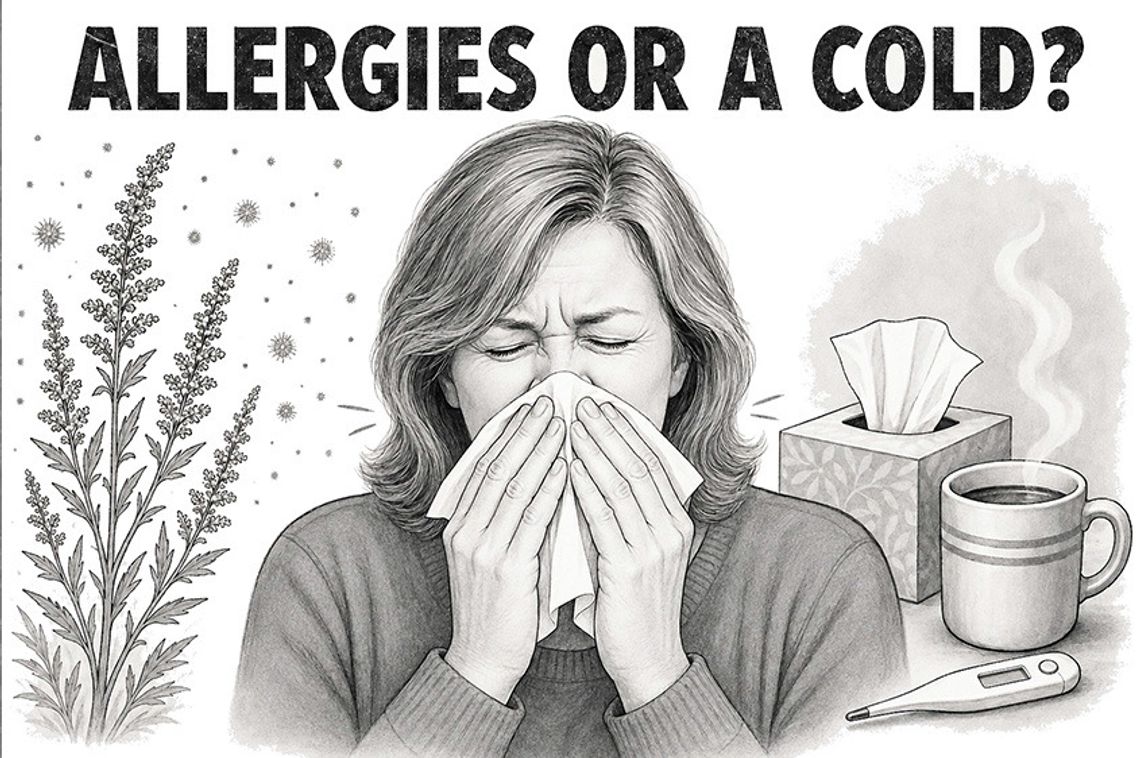
Sneezing, sniffling and scratchy throats may seem to be everywhere as August comes to an end, leaving many Clay County residents asking the same question: Is it allergies or a cold?
The answer is not always obvious. Late summer brings the beginning of weed allergy season in Nebraska at about the same time students return to school. Both allergies and common colds can cause sneezing, congestion and a runny nose, but a few clues may help tell them apart.
Clay County does not have a public pollen-counting station, so there is no verified daily count specifically for the county. Regional readings can still give residents an idea of what is in the air.
On Aug. 27, Nebraska Wesleyan University’s pollen station in Lincoln reported high levels of weed and grass pollen. Ragweed was the most common weed pollen recorded, followed by hemp, pigweed, plantain and nettle. Recent allergy reports for the Hastings area have also listed ragweed, hemp and nettle among the leading allergens.
According to the University of Nebraska Medical Center, Nebraska’s ragweed season generally begins around Aug. 15. It often reaches its peak in September and may continue until the first hard frost.
Common colds can also become more noticeable as summer ends. Although people can catch a cold at any time of year, many cold viruses are especially common in late summer and fall. The Centers for Disease Control and Prevention reported Aug. 21 that common cold viruses were increasing nationally, although there is no public information showing exactly how much illness is circulating in Clay County.
The start of school gives viruses more opportunities to spread as students and adults spend more time together indoors. Allergies, on the other hand, are not contagious. They happen when the body reacts to something in the environment, such as pollen.
Itching is one of the best clues that allergies may be responsible. Allergies commonly cause an itchy nose or throat and red, watery or itchy eyes. They may also cause repeated sneezing and thin, clear drainage.
A cold is more likely to cause an actual sore throat rather than an itchy one. Colds may also bring a cough, headache, mild body aches or a low fever. Symptoms usually build over a day or two and often feel worst on the second or third day.
Allergy symptoms may begin after a person goes outside, improve indoors and return after another trip outside. They can continue for weeks while pollen remains in the air. Cold symptoms usually improve within a week, although some can last as long as two weeks.
Of course, symptoms do not always follow the rules. Allergies can irritate the throat, and a cold can begin with sneezing and clear drainage. It is also possible, because life is sometimes especially generous, to have allergies and a cold at the same time.
People with allergies may find relief by keeping windows closed when pollen is high, changing clothes after spending time outdoors and showering before bed. Those with a cold can help protect others by washing their hands, covering coughs and sneezes and staying home when they have a fever or feel too sick for normal activities.
A health care provider should be contacted when symptoms are severe, last longer than expected or include wheezing, trouble breathing or a persistent fever.
For now, itchy eyes and an itchy nose may point toward allergies. A growing sore throat, cough or body aches may suggest a cold. Sometimes, however, the only honest answer is to give it a day or two and see what shows up next.