Fireflies bring light, movement and a little mystery to Nebraska evenings
On warm summer nights, children often run through grassy areas trying to catch the small lights glowing around them. These insects are known by many names, including fireflies, glow flies, golden sparklers, Big Dippers and lightning bugs.
Kait Chapman with Nebraska Extension explained during a teleconference that fireflies are not actually flies or bugs. They are lightning beetles. Like other beetles, they have chewing mouthparts, elytra, or hardened forewings, two pairs of wings, antennae and walking legs.
Worldwide, there are about 2,000 distinct types of lightning beetles. The United States and Canada have about 150 species, and Nebraska has 14 known species. In our area, the most common is the eastern firefly, also called the Big Dipper firefly because of its dipping flight pattern.
June and July are peak months for fireflies, when they bring lighted beauty and graceful movement to summer nights.
Firefly light is produced through a chemical reaction called bioluminescence. The abdomen includes the “lantern” area, where oxygen helps produce the glow. These flashes are considered cold light, which is different from the light used in homes.
Adult lightning beetles primarily use light to communicate and attract mates. Each species has its own flash pattern, timing and color. Females are usually found on lower vegetation, while males fly above looking for them.
Fireflies lay their eggs in moist soil or leaves, and the eggs may glow faintly. The egg stage lasts about one to three weeks. Larvae then appear and look wormlike. They are usually carnivorous, feeding on worms, snails and other small, soft-bodied creatures. The larval stage can last one to two years.
The pupal stage lasts about one to three weeks. Pupae may overwinter in soil or rotting logs, which helps protect them from harsh winter conditions. After this stage, they develop into adult firefly beetles and begin the next generation.
The adult stage is short, lasting about one to four weeks. Most adult beetles do not eat during this stage, although some may feed on summer plants and visit colorful flowers.
Like other species, fireflies are part of the natural food chain. They are prey for birds, frogs and spiders.
Firefly populations are declining because of several threats. Loss of natural habitat, including wetlands, streams and trees, plays a role in reducing beetle populations. Climate change is also affecting fireflies and other insects.
Light pollution also interferes with fireflies’ ability to communicate. This is especially common in cities, where streetlights, building lights and other outdoor lighting disrupt nightly firefly activity. Pesticides and lawn chemicals can also affect fireflies, even though these products are often used in gardens and fields to manage pest insects.
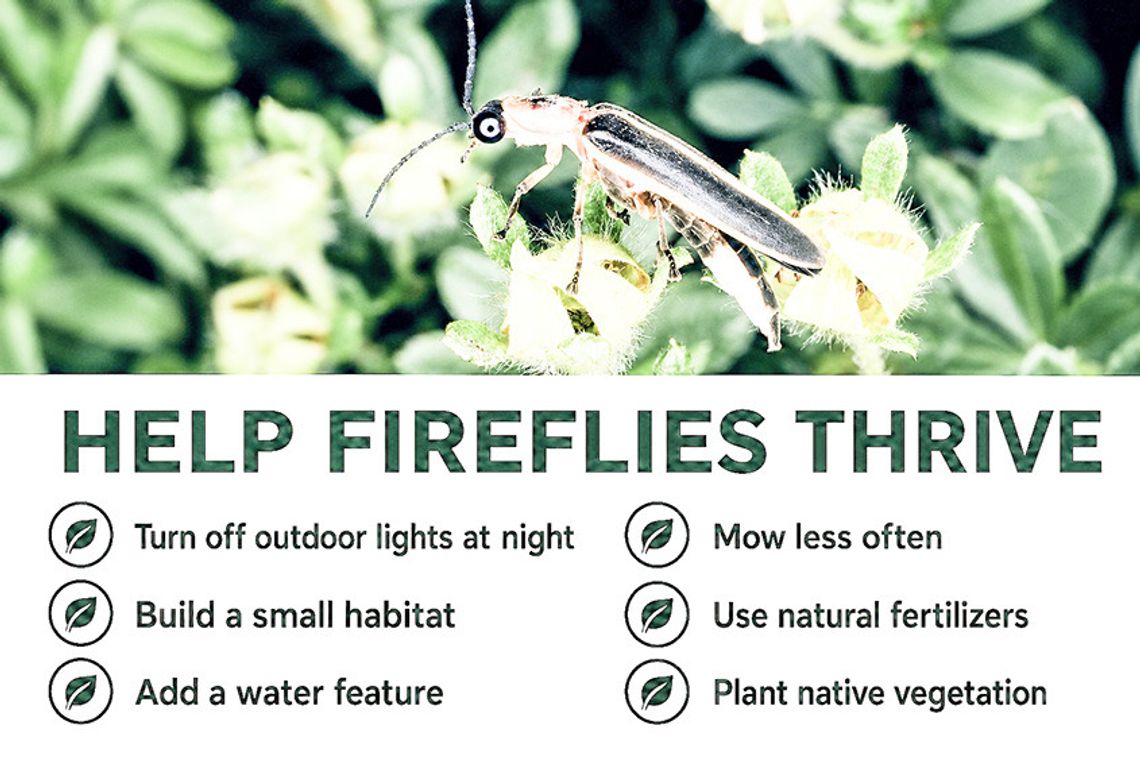
There are simple steps people can take to help firefly populations. Fireflies respond well to good habitat. As the saying goes, “Give them what they need, and they come back.” Simple changes can make a meaningful impact.
Providing the basic needs of food, shelter, moisture, darkness and protection from chemicals can create a refuge for fireflies. Even a small area can make a difference.
When fireflies are abundant in yards, fields or other areas, it is often a sign of a healthy firefly habitat.