Parents do not have to understand every new app, social media trend or piece of technology to help keep their children safer online.
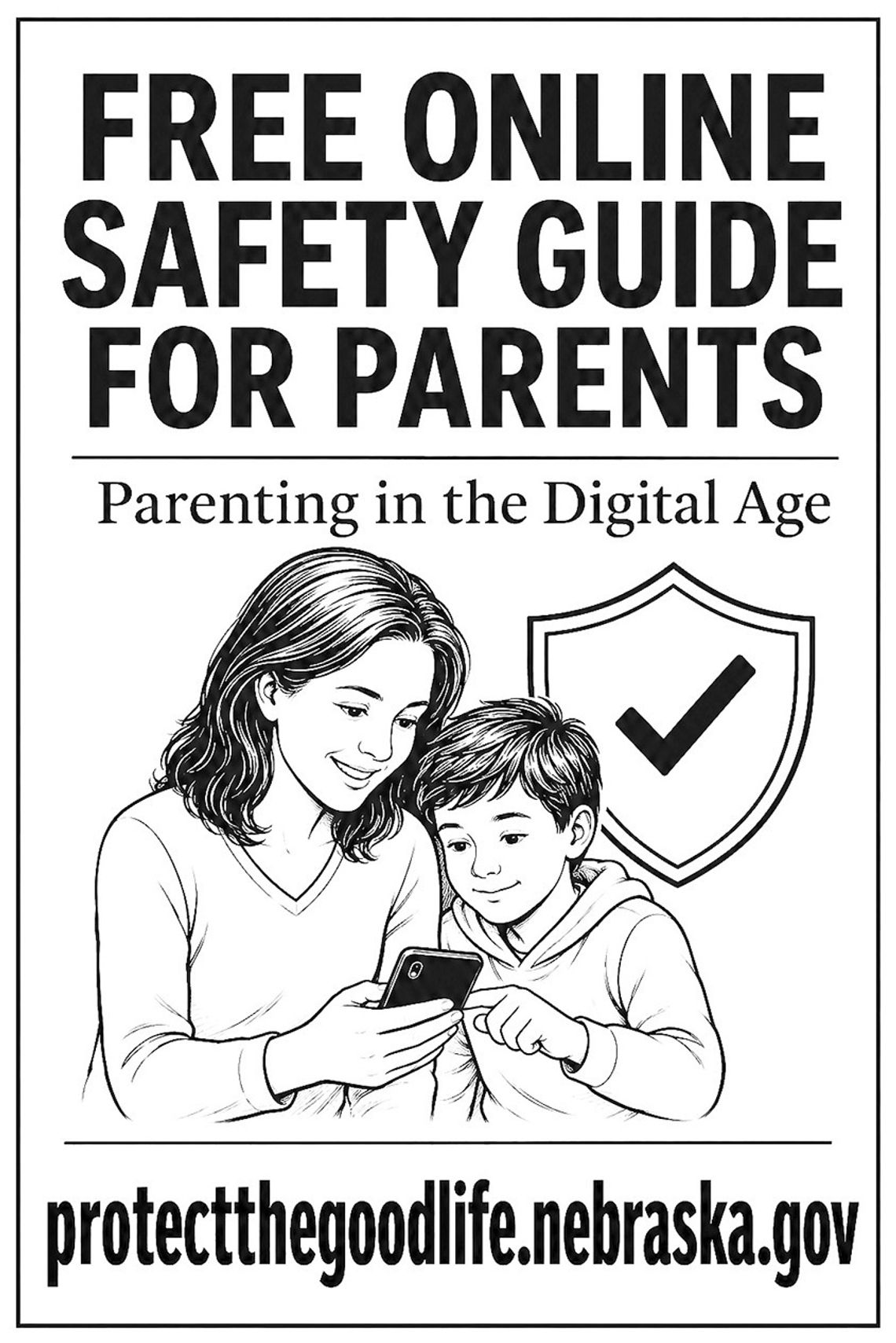
That is one of the messages in “Parenting in the Digital Age,” a free, 32-page resource released Aug. 27 by the Nebraska Attorney General’s Office.
The publication combines information about online risks with practical instructions parents can use on their children’s devices. Topics include screen time, social media, cyberbullying, online grooming, sextortion, artificial intelligence and potentially risky apps.
The guide was released one day after Nebraska Attorney General Mike Hilgers announced a $17.1 billion multistate settlement with Meta, the company that owns Facebook and Instagram. The Attorney General’s Office described it as the largest state consumer protection settlement outside the Big Tobacco settlements of the 1990s.
The settlement resolves lawsuits and other legal claims brought by 47 states, the District of Columbia and several U.S. territories. The states alleged that Meta designed Instagram with addictive features, knowingly exposed young users to serious mental health risks and misled parents and the public about the safety of its platforms.
Meta did not admit liability or wrongdoing as part of the settlement. The company agreed to make payments and implement a series of child safety changes on Instagram and Facebook. Nebraska will receive up to $201.1 million.
The required changes include a combined two-hour daily limit for children using Instagram and Facebook, with pauses after 15 minutes of continuous use and again at 60 and 90 minutes. Access will be restricted between midnight and 6 a.m., and push notifications will be eliminated on weekdays from 8 a.m. to 3 p.m. during the school year.
The agreement also calls for stronger age verification, more user-friendly parental controls and added protections against bullying and content involving eating disorders, suicide and self-harm. An independent auditor and the settling states will assess whether the changes are properly implemented and effective.
While those changes are being put into place, the new state resource is intended to help parents address online risks within their own homes.
“Parents do not need to be technology experts to help protect their children online,” it states. “Staying engaged, setting healthy boundaries and maintaining open communication all make a meaningful difference.”
Rather than focusing only on restrictions, parents are encouraged to create an environment in which children feel comfortable reporting an uncomfortable message, threatening interaction or mistake made online. That includes asking open-ended questions, listening fully and making it clear that asking for help will not automatically result in losing a phone or other privileges.
Parents can also begin with several basic questions: Who can contact their children? Are their accounts private? Can they download apps without permission? Are phones allowed in bedrooms overnight?
Those conversations should include more than smartphones. Gaming systems, tablets, watches and smart televisions may also allow children to browse the internet, exchange messages or communicate with people they do not know.
Some online risks may be difficult for adults to recognize. An app used to hide photos, videos or messages, for example, may be disguised as an ordinary calculator or notepad. Other apps allow messages or photographs to disappear after they are viewed or share a child’s location with people outside the home.
Changes in a child’s behavior may also indicate that something is wrong. Sudden secrecy, unusual defensiveness, changes in sleep or school performance and excessive attention from an older teen or adult are among the possible warning signs of online grooming.
Grooming often begins with someone gradually gaining a child’s trust. The person may pose as a peer, offer attention or understanding and eventually encourage the child to hide the relationship from family and friends.
A similar approach may be used in sextortion cases. An offender may pretend to be another teenager or romantic interest and persuade a young person to send a sexual image. The offender then threatens to distribute the image unless the victim sends additional material or money.
Sending money or complying with further demands rarely stops the threats. Parents are encouraged to preserve messages, screenshots and usernames and contact law enforcement.
Newer concerns involve artificial intelligence, which can provide false information, collect personal details or be used to alter a child’s photograph. AI tools can also produce realistic abusive images involving minors. Creating, possessing or distributing that material may be illegal even when it was digitally produced.
For parents who are ready to adjust settings but do not know where to begin, the publication includes illustrated instructions for Apple Family Sharing, Google Family Link, content restrictions and screen time controls. It also explains how to limit location sharing, prevent unauthorized app downloads and enable two-factor authentication.
“Our office will not stop fighting the battle to protect children online in Nebraska,” Hilgers said. “Nebraska parents are trying to make good decisions for their children, but unfortunately, social media companies have misled them. We hope this guide is a valuable tool to support parents.”
“Parenting in the Digital Age” is available at protectthegoodlife. nebraska.gov. The guide is featured at the top of the page. Interested people may also request a copy of the guide by contacting the office’s Consumer Affairs Response Team at 402-471-2785.
Suspected online child exploitation may be reported to local law enforcement or the FBI Omaha Field Office at 402-493-8688.