As national leaders consider increasing beef imports to address high prices, some Nebraska consumers may be asking a more local question: In a state filled with cattle, why is it so difficult for neighborhood grocery stores to sell beef raised and processed nearby?
The answer usually is not that the store does not want to support local farmers. The biggest obstacle is how the animal was processed and what type of inspection it received.
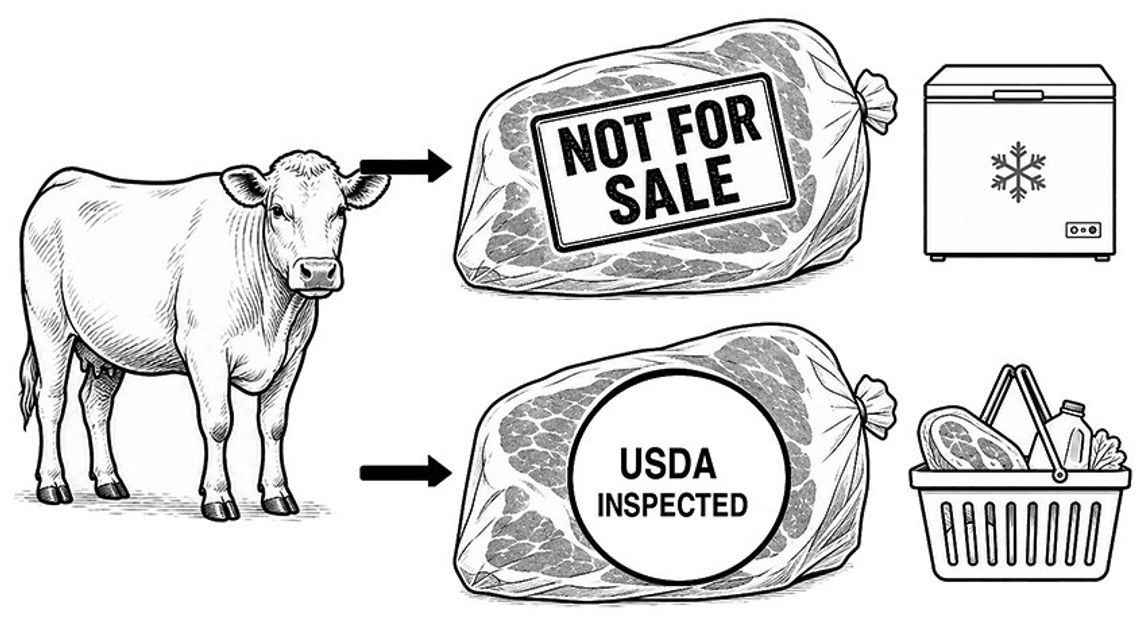
A grocery store can sell locally raised beef, but the animal generally must be slaughtered and processed at a federally inspected facility.
At those facilities, an inspector examines the animal before slaughter for signs of illness. Afterward, the carcass and organs are inspected for disease, contamination or other problems. Inspectors also monitor sanitation, humane handling, food-safety procedures and required records.
Once the meat passes inspection, it can carry the USDA inspection mark and be sold commercially.
Many small-town lockers operate under a custom exemption instead. They process animals for the people who own them. These lockers must follow sanitation, recordkeeping and humane-handling rules, but a federal inspector does not examine each animal and carcass.
Because of that, custom-processed meat must be marked “Not for Sale.”
That label does not necessarily mean the meat is unsafe or the processor did anything wrong. It means the meat did not receive the inspection required for commercial sale.
A local family can purchase a whole, half or quarter of an animal and have it custom processed. The meat may be used by the owners, their households and nonpaying guests. It cannot be sold to a grocery store or restaurant.
A federal proposal called the PRIME Act would change that.
The bipartisan bill would allow individual states to decide whether certain custom- processed beef, pork and lamb could be sold within their borders. If it became law and Nebraska chose to participate, the state could allow qualifying local processors to provide meat to Nebraska consumers, restaurants and grocery stores.
Supporters say this could help farmers who currently must transport animals to a federally inspected facility, sometimes far from home. It could also give small processors more business and make locally raised meat easier to find.
Opponents may question whether periodic oversight offers the same protection as having an inspector present during slaughter.
The full PRIME Act has not passed. However, a narrower pilot program was included in the Farm Bill passed by the U.S. House in April.
That version would allow participating custom processors to sell meat directly to consumers within the same state. Packages would have to clearly state that the meat was not federally inspected and provide information about where the animal was raised and processed.
The pilot would not allow the meat to be resold. That means families might eventually be able to purchase individual packages directly from a participating processor, but grocery stores and restaurants still could not buy and resell them.
Supporters believe allowing more small processors to compete could reduce costs. However, it would not guarantee lower beef prices. Prices are also affected by cattle numbers, feed costs, weather, labor, transportation and consumer demand.
For now, local grocery stores can sell local beef only when it has gone through the required commercial inspection process.
So, when shoppers wonder why cattle raised nearby are not represented in the local meat case, the answer is not as simple as a store choosing not to buy local. The biggest obstacle may be where the animal was processed and what type of inspection it received.