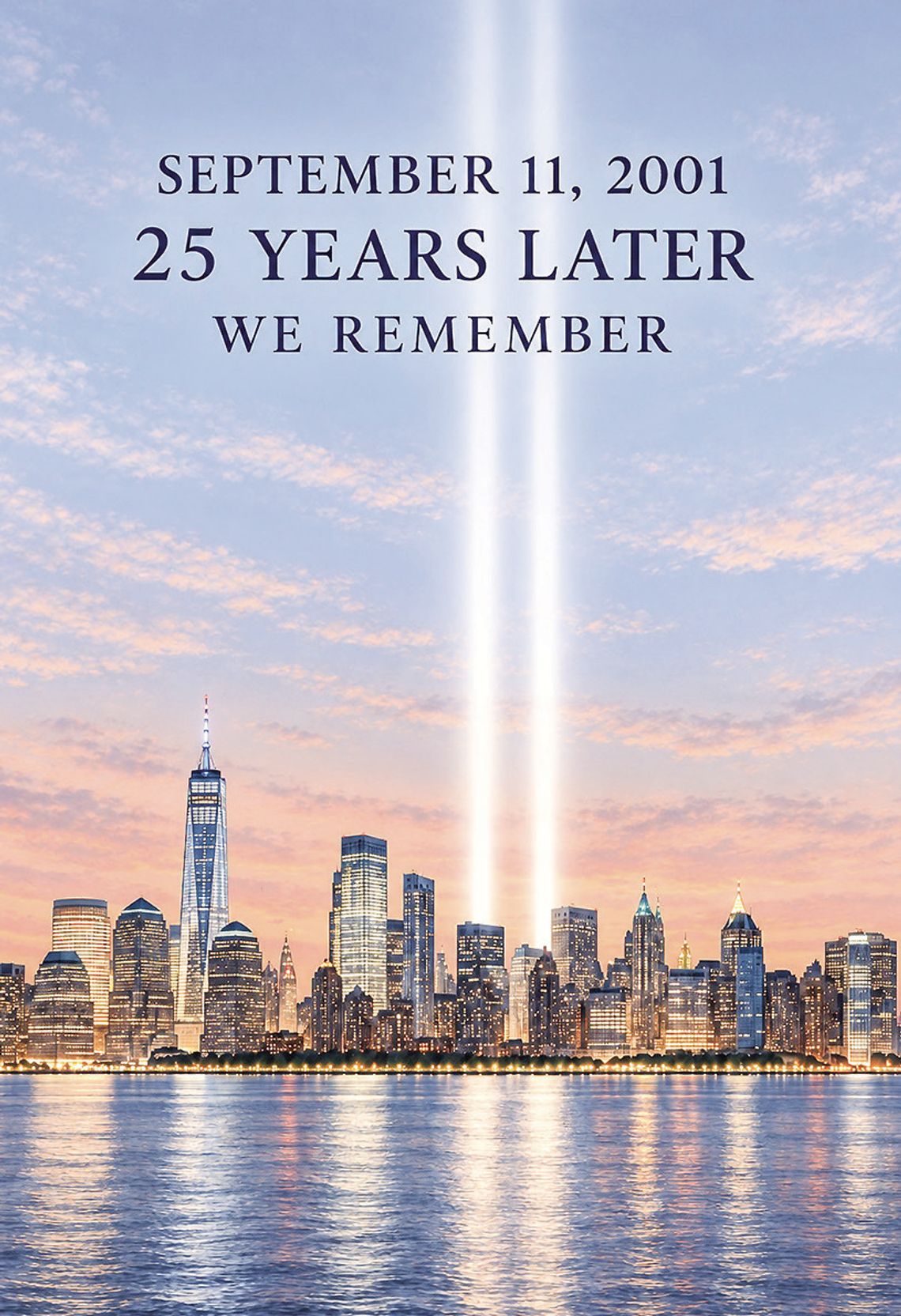
Twenty-five years have passed, but for millions of Americans, the memories of Sept. 11, 2001, remain remarkably clear.
They remember where they were when they first heard that an airplane had struck the World Trade Center. They remember watching the second plane hit and realizing the country was not witnessing a terrible accident. They remember the smoke, the collapsing towers, the confusion and the desperate search for information about loved ones.
They also remember the silence that followed.
The official death toll from the Sept. 11 attacks is 2,977. That number does not include the hijackers, nor does it fully reflect the lives that continued to be lost in the years that followed For those old enough to remember the attacks, Sept. 11 is more than a chapter in a history book. It is a collection of images and emotions that have remained for a quarter of a century.
That passage of time makes the anniversary especially significant. The responsibility for remembering is gradually shifting from those who witnessed the attacks to those who know about them through photographs, videos, classrooms and the stories of parents and grandparents.
Remembering Sept. 11 means remembering the horror of what happened, but it also means remembering what followed.
Across the country, people lined up to donate blood. Strangers helped strangers escape smoke-filled buildings and crowded streets. First responders worked without knowing whether they would return home. Volunteers traveled to New York, Washington and Pennsylvania to provide food, supplies, medical care and support.
In communities far from the sites of the attacks, Americans gathered in churches, schools, fire stations and town squares. Flags appeared on homes, businesses and vehicles. People checked on neighbors, called relatives and looked for ways to help.
Each year, the names of those killed are read aloud at the National September 11 Memorial in New York. Similar ceremonies are held at the Pentagon and near the Flight 93 crash site in Pennsylvania. Moments of silence mark the times when the planes struck and the towers fell.
Those observances are built around something simple but important: remembering each person as an individual, not merely as part of a number.
Twenty-five years later, the buildings have been rebuilt and a generation has grown up. Time has moved forward, as it always does.
But on Sept. 11, the nation pauses. It remembers those who left home that morning and never returned. It remembers those who ran toward danger to help people they had never met. It remembers the families who have carried their losses for 25 years.
And it remembers a day that will never become simply another date in a