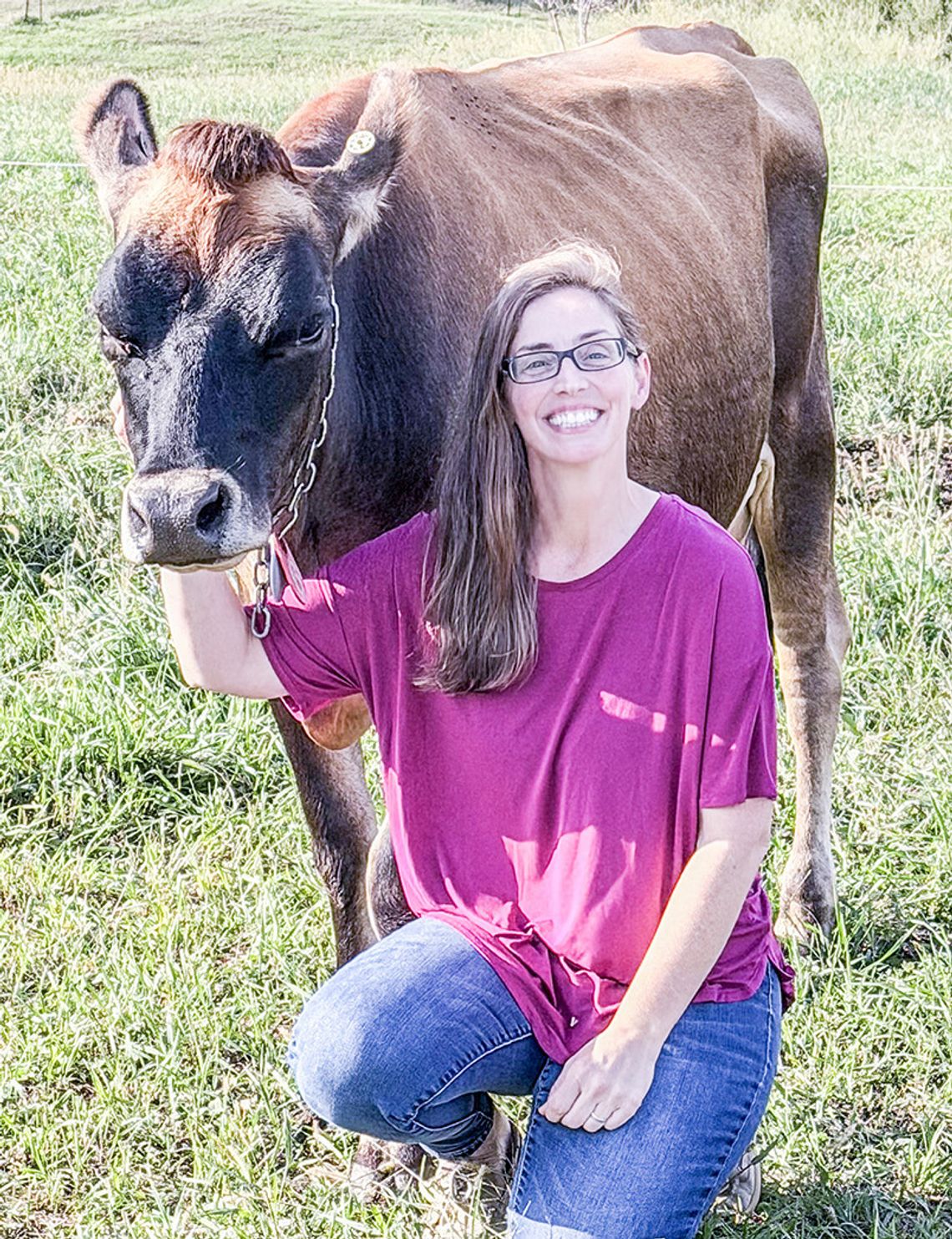
For Jenny Thorson, dairy farming is more than a daily routine. It is a relationship built on patience, respect, science and deep care for the animals in her charge. Her micro dairy near Sutton reflects a lifetime of learning, a love for livestock and a belief that small-scale farming can offer something meaningful to both animals and customers.
Jenny grew up in Surrey, ND, where she spent many days and long hours learning to care for large animals. She credits Robert “Bob” Rindt, her childhood mentor, with helping develop her passion for kind, attentive animal care and genuine relationships with livestock.
After moving from Montana to Sutton in 2022, Jenny discovered a stronger local interest in raw milk. What began with one Jersey cow purchased in 2018 has grown into a small, intentional dairy operation centered on quality, animal welfare and customer trust. That first cow, Artisan, known as Artie, had been shown in 4-H and was already comfortable with grooming and human contact. Tame and easy to handle, Artie helped lay the foundation for the dairy Jenny operates today.
A micro dairy operates on a much smaller scale than a large commercial dairy. Instead of caring for hundreds or thousands of cows, Jenny keeps her herd intentionally limited so she can focus on quality, rotational grazing and the well-being of each animal. For her, a small herd is not a limitation; it is what allows the dairy to work well.
That smaller scale allows Jenny to know her cows closely, notice changes in their health or behavior and create a calm environment built on trust and respect. The connection between handler and animal is central to her approach.
Jenny does most of the work herself, and the day begins early. She is often up around 3 a.m. to start chores and prepare for milking. The cows are usually milked between 6 and 7 a.m., followed by the daily rhythm of animal care, grazing management, cleaning and evening chores.
The work may be smaller in scale, but it is personal, detailed and constant. Weather is one of the biggest challenges. Cold, heat, and rain, along with time changes, can affect the cows, the workday and the rhythm of the farm.
Jenny raises Jersey cattle, a breed known for rich milk, grazing efficiency and high butterfat. She describes their milk as creamy and slightly golden. For a small dairy focused on quality rather than volume, Jerseys are a natural fit.
Jenny also pays attention to A2 genetics. A2 milk contains the A2 type of beta-casein protein rather than a mix of A1 and A2 proteins. Some consumers report that A2 milk is easier for them to digest, although individual experiences vary.
Jenny’s cows eat grass and hay, without grain in their diet. She notes that many factors can influence the taste, color and quality of milk, including feed, stress levels, weather and calving season. Keeping the cows in a consistent routine and treating them respectfully are important parts of her approach to producing milk.
The dairy currently offers raw milk with cream. Customers contact Jenny to schedule pickup, and approximately 45 families make up her customer base. Customers bring their own clean, sanitized glass jars.
While milk is the only product sold, Jenny and her family use it at home to make butter, cheese and other dairy products. She has experimented with around 20 kinds of cheese, carefully researching methods, processing times and recipe adjustments.
Jenny uses practical regenerative and sustainable practices that fit the size of her operation. Soil testing helps determine what nutrients the pasture needs. Composting makes use of waste material, and manure is spread on grassland and hay areas. Weeds are managed by mowing, allowing desirable pasture plants to regrow and support rotational grazing.
Jenny has seen growing interest in locally produced raw milk, especially from families making personal choices about food, health and sourcing. While some consumers say they choose raw milk for health or digestive reasons, Jenny acknowledges that those experiences do not establish broad health benefits. For many customers, the decision reflects their own experiences, values and comfort level.
Jenny describes her commitment to cleanliness and animal care as a “grass-toglass” approach, where every step matters. That includes animal health, milking procedures, rapid chilling and equipment sanitation.
The Raw Milk Institute has established standards for raw milk intended for direct human consumption, with an emphasis on farmer training, consumer education, transparency and safety practices.
Jenny hopes to return to activities she has enjoyed, including riding and showing Quarter Horses. She also has future projects in mind for the dairy, including a milk room and a website.
Although Jenny grew up admiring the sunrises and sunsets of North Dakota, she says some of the most breathtaking sunsets she has seen are right here in Nebraska. That appreciation for place, animals and the daily work of farming comes through clearly when she talks about her dairy.
What stands out most is Jenny’s enthusiasm. Her knowledge of milk, cattle, animal care and dairy science is matched by her compassion for the animals themselves. Her joy is contagious, and it is easy to understand why customers are drawn not only to the milk, but also to the thoughtful care behind it.
Jenny holds a doctorate in physiology of reproduction, with a focus on neuroendocrine regulation in domestic livestock.
For more information, visit her Facebook page, Chic Sht LLC, or email chicshtllc@ outlook.com.