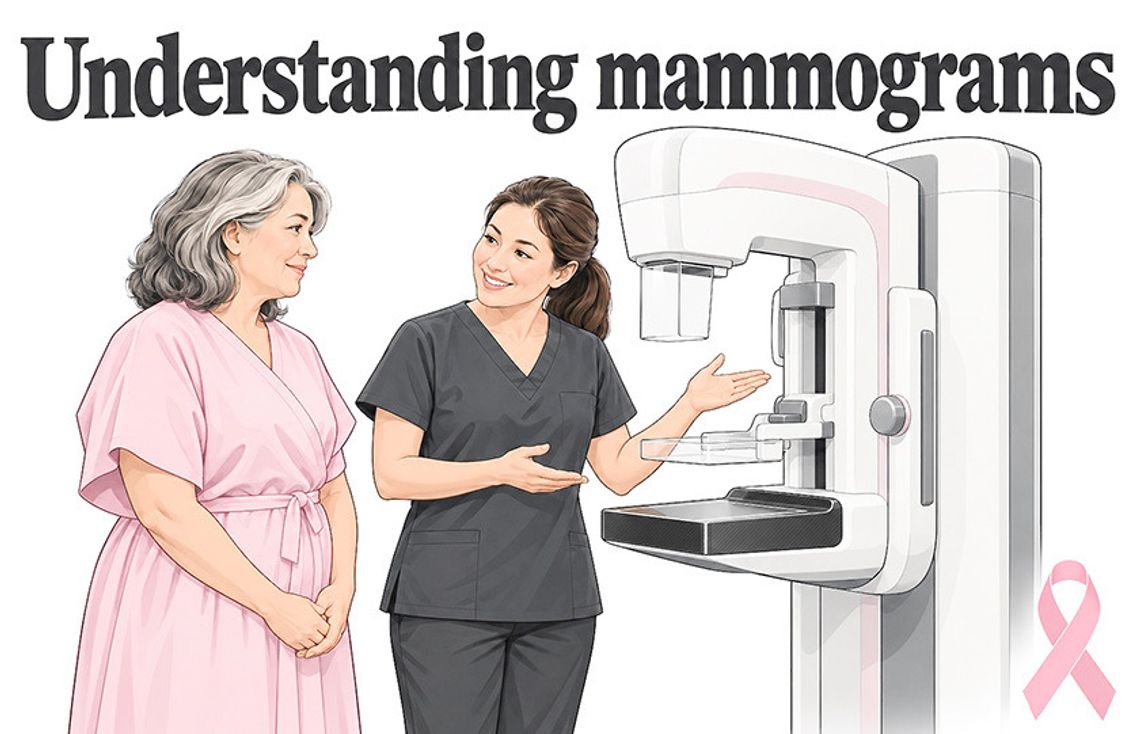
A mammogram is an appointment that can be easy to put off. Busy schedules, uncertainty about what to expect or worry about the results can all make it tempting to leave the reminder for another day.
October’s Breast Cancer Awareness Month offers a chance to move that appointment up the list — and get answers to questions that can make breast screening feel confusing.
For women in Clay County, those questions may begin with the basics: When should mammograms start? Is one needed every year? And what is the difference between a regular mammogram and a 3D exam?
Mammograms use low-dose X-rays to look for changes in breast tissue. They can find breast cancer before a lump can be felt or other symptoms appear, giving patients and their healthcare providers an opportunity to address it earlier.
Some of the confusion comes from the names used for the exams. Screening and diagnostic mammograms describe why the test is being done, while 2D and 3D describe the way the images are made.
A screening mammogram is the routine exam used when someone has no breast symptoms. A diagnostic mammogram takes a closer look at a concern, such as a lump, or something that appeared on a screening exam. It may include additional images of a particular area.
Being asked to return for more pictures does not necessarily mean cancer has been found. Sometimes the radiologist simply needs a clearer view before determining what a change means.
A traditional digital mammogram, often called 2D, creates flat images of the breast. A 3D mammogram, also known as digital breast tomosynthesis, takes pictures from several angles. A computer turns them into thin image slices, allowing the radiologist to examine tissue in more detail.
The American Cancer Society says studies suggest 3D mammography can find more cancers and reduce the likelihood of being called back for additional testing. It may be especially helpful for women with dense breasts. Both 2D and 3D mammograms are accepted screening options.
Knowing when to schedule the next appointment can be less straightforward because national medical organizations recommend different screening schedules.
The U.S. Preventive Services Task Force recommends mammograms every two years for women ages 40 through 74 at average risk. For women 75 and older, it says there is not enough evidence to determine the balance of benefits and harms of routine screening.
The American Cancer Society gives women ages 40 through 44 the option of beginning annual mammograms. It recommends yearly screening from ages 45 through 54. Women 55 and older may continue annually or switch to every other year, with screening continuing while they are in good health and expected to live at least 10 more years.
The American College of Radiology recommends annual mammograms beginning at age 40 for women at average risk.
For someone hearing different advice, the next step is a conversation with a healthcare provider. Age, overall health, personal and family history and individual preferences help shape a screening plan.
Women at higher risk may need screening earlier or additional imaging. The American Cancer Society recommends yearly mammograms and breast MRI, typically beginning at age 30, for certain high-risk women, including those with BRCA1 or BRCA2 mutations or a sufficiently elevated lifetime risk. MRI is used alongside mammography rather than replacing it.
Another term women may see in their results is “dense breasts.” It describes breast tissue that contains more fibrous and glandular tissue relative to fat. Dense tissue can make cancer harder to see on a mammogram and increases breast cancer risk.
Since September 2024, federal requirements have directed mammography facilities to tell patients whether their breasts are dense. Receiving that notice is not a cancer diagnosis. It is information to bring into the conversation about future screening.
Some patients may benefit from additional ultrasound or MRI, but dense breasts do not automatically mean another test is necessary. The task force says there is insufficient evidence to recommend for or against those additional screenings after an otherwise negative mammogram in women with dense breasts.
Knowing what happens during the appointment can also ease uncertainty. Both 2D and 3D mammograms require briefly compressing the breast between plates to obtain clear pictures. That pressure can be uncomfortable or painful, and patients should tell the technologist if it hurts.
A little preparation helps. The American Cancer Society recommends avoiding deodorant, antiperspirant, powders and lotions under the arms or on the breasts on exam day because they can interfere with the pictures. Anyone going to a new facility should arrange to have previous mammograms available for comparison. Patients should also tell the technologist about breast implants or any new breast concerns.
Mammograms are useful, but they are not perfect. They can miss cancers or lead to additional tests for findings that turn out to be harmless. Screening can also find a cancer that would never have caused health problems. Understanding those limitations is part of making an informed decision.
A new breast change deserves attention even when the last mammogram was normal. Women should contact their healthcare provider rather than wait for the next routine screening appointment.
Breast Cancer Awareness Month does not have to come with pressure to know every medical term or have every answer. It can begin with a few simple questions: When was my last mammogram? When should I have another? Is there anything in my history that changes the plan?
Making room for that conversation is one way to make room for personal health, even when the calendar is already full.