Why are Americans still changing their clocks?
Twice a year, millions of Americans participate in a familiar tradition that involves changing clocks, adjusting sleep schedules and wondering why the practice continues in the first place.
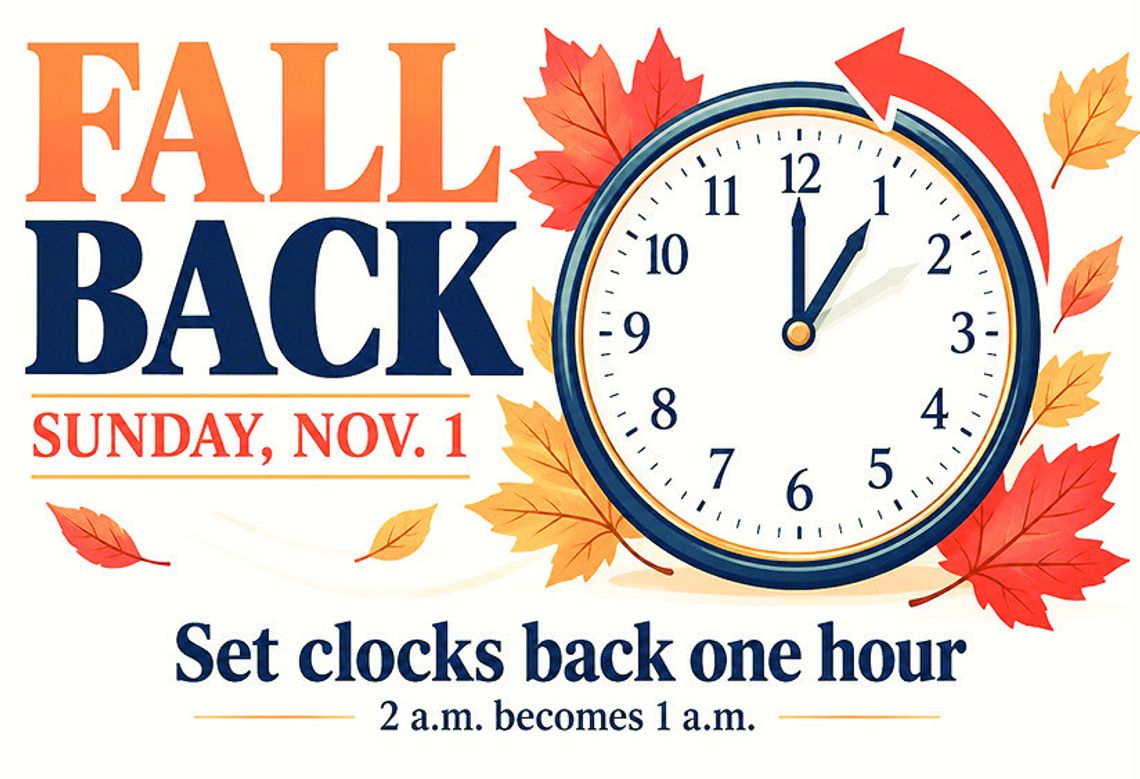
On Sunday, November 1, daylight saving time officially ends at 2 a.m., when clocks move backward one hour. That means an extra hour of sleep for those fortunate enough to take advantage of it.
Of course, it also means the sun will begin setting an hour earlier according to the clock, making those already- short autumn evenings feel even shorter.
And once again, the familiar debate will begin. Why do the clocks change? Does it actually accomplish anything? And perhaps most importantly, why can’t the country just pick a time and stick with it?
The answers go back more than a century.
Daylight saving time was first introduced nationally in the United States in 1918 during World War I. The idea was to conserve energy by shifting an hour of daylight from the morning to the evening, theoretically reducing the need for artificial lighting.
It wasn’t an entirely new concept. Benjamin Franklin had written a humorous essay back in 1784 suggesting that people could save money on candles by getting out of bed earlier. Although Franklin is frequently credited with inventing daylight saving time, his suggestion was more satire than a serious proposal to change the clocks.
After World War I, the United States abandoned the national daylight saving schedule, leaving communities to make their own decisions. The practice returned nationally during World War II, when conserving energy again became a priority.
Following the war, things became rather confusing. Some communities observed daylight saving time while neighboring communities didn’t. Traveling from one town to another could mean discovering that everyone was operating on a different clock.
Congress eventually stepped in with the Uniform Time Act of 1966, establishing a more consistent system across the country.
The dates have changed several times since then. In 2007, the current schedule took effect, moving the beginning of daylight saving time to the second Sunday in March and its ending to the first Sunday in November.
That means Americans now spend roughly eight months of the year on daylight saving time and only four months on standard time.
One of the most persistent myths about daylight saving time is that it was created to benefit farmers.
Actually, farmers were among its earliest opponents.
Farm work has always depended more on sunlight, weather and the needs of animals than on what a clock says. Cows don’t suddenly decide to be milked an hour later because someone adjusted the time, and crops don’t dry any faster just because the clocks have changed.
For farmers, the change could actually complicate schedules, particularly when coordinating with businesses, transportation and markets operating on the new time.
So if farmers didn’t want it, who did?
Historically, supporters pointed to energy conservation, business activity and the opportunity for people to enjoy more daylight after work. Longer evenings could mean more time for outdoor recreation, shopping and other activities.
But whether daylight saving time actually saves much energy remains a subject of debate.
Modern homes use electricity for far more than lighting, including heating, cooling, computers and appliances. Shifting an hour of daylight doesn’t necessarily produce the same savings that supporters originally envisioned.
There are also concerns about how changing the clocks affects people’s health.
Even a one-hour adjustment can temporarily disrupt sleep schedules and the body’s internal clock. The spring change, when people lose an hour of sleep, tends to be especially difficult.
The fall change may sound more appealing because it offers an extra hour, but the sudden shift to darker evenings can still take some getting used to.
For people who leave work in the late afternoon, the difference can be especially noticeable. One day there’s still daylight for a walk or a few outdoor chores. The next, it feels like bedtime is approaching before supper is even on the table.
Not everyone in the United States participates in the twice-yearly ritual.
Hawaii and most of Arizona remain on standard time throughout the year. The Navajo Nation, which extends into Arizona, does observe daylight saving time.
Federal law allows states to choose permanent standard time, but states cannot independently adopt permanent daylight saving time. That would require a change in federal law.
Over the years, lawmakers have repeatedly proposed eliminating the clock changes, but agreement on which time to keep has proven difficult.
Some people prefer permanent daylight saving time because they enjoy more light in the evening. Others favor permanent standard time, which more closely follows the sun’s natural cycle and provides earlier morning daylight.
For now, Nebraska continues to follow the national schedule.
The November change also provides a convenient reminder to take care of a few household tasks.
Fire safety organizations encourage residents to test smoke alarms regularly and check that carbon monoxide alarms are working properly. The time change can serve as a reminder to inspect those devices, replace batteries when needed and make sure alarms haven’t reached the end of their recommended service life.
It’s also a good opportunity to check clocks that don’t update automatically, including those on stoves, microwaves, vehicles and older household electronics.
Most smartphones and computers will make the adjustment on their own, provided their automatic time settings are enabled.
As for adjusting to the change, maintaining a consistent bedtime, getting some natural daylight in the morning and keeping regular daily routines can help.
And for anyone wondering whether this might finally be the last time Americans have to change their clocks, there’s little reason to count on it just yet.
The country has been debating daylight saving time for generations, and the disagreement doesn’t appear to be going away anytime soon.
Before heading to bed Saturday, October 31, clocks that don’t adjust automatically can be turned back one hour.
The extra hour of sleep may be welcome.
The debate will almost certainly return in March.